




Blog
China Top 10 Pharma Blister Machine Manufacturers
China’s pharmaceutical blister-machine market is shaped by a practical challenge: protecting each dose while maintaining consistent, efficient production. A blister line must coordinate forming, filling, sealing, cutting, and inspection. A small temperature shift can affect a foil seal. A poorly controlled changeover can slow a whole shift. These details matter when comparing China’s top 10 pharma blister machine manufacturers.
The World Health Organization’s 2017 study estimated that about 10.5% of medical products in low- and middle-income countries were substandard or falsified. This figure is not a blister-machine failure rate. It does, however, underline why packaging integrity and dependable process controls deserve attention. WHO Director-General Tedros Adhanom Ghebreyesus has stated, “We cannot achieve universal health coverage without access to safe, effective, quality and affordable medicines and health products.” For Blister Machine Pharma buyers, that quality principle makes equipment performance part of a wider patient-safety discussion.
This overview compares manufacturers through practical criteria: machine configuration, production flexibility, changeover design, inspection options, documentation, and after-sales support. Product brochures can show impressive speeds. Real production also depends on the material, format, and operating conditions. That distinction is easy to overlook. No ranking can replace a factory audit or a sample run. Still, a careful comparison can help buyers identify suppliers worth evaluating and questions worth asking before making a purchase.
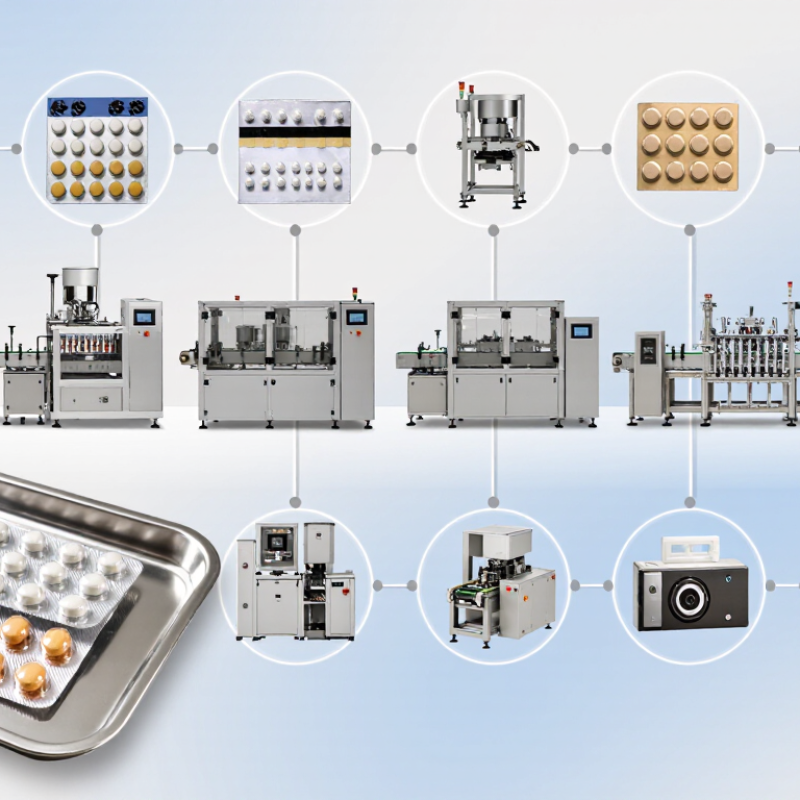
Blister Packaging Fundamentals: 250–500 μm PVC and 20–30 μm Aluminum Lidding
Blister packaging depends on the balance between forming depth, product protection, and reliable sealing. A 250–500 μm PVC base web offers a practical thickness range for thermoforming; deeper cavities generally need careful control to avoid thinning at corners. The numbers are starting points, not universal specifications. Tool temperature, forming pressure, and cavity geometry all affect the finished pocket. Small details matter.
A 20–30 μm aluminum lidding foil provides a puncturable, peelable closure when matched to the sealant layer and machine settings. European Aluminium’s technical material on packaging foil documents gauges extending into the single-digit micrometre range, showing why lidding thickness should suit the application rather than simply be maximized. ASTM F1249 provides a method for measuring water-vapor transmission, while ASTM D3985 measures oxygen transmission through plastic films. These tests help compare barrier performance; they do not replace trials on the actual laminate. Check seal integrity, forming uniformity, and pinholes during line validation. Thicker can still fail. That is easy to overlook when a material specification looks reassuring on paper.
China Top 10 Pharma Blister Machine Manufacturers - Blister Packaging Fundamentals: 250–500 μm PVC and 20–30 μm Aluminum Lidding
This table summarizes blister-packaging materials and process fundamentals. It is not a manufacturer ranking, and it contains no company or brand names. Material selection and operating settings should be confirmed for the product, packaging specification, and production line.
| Parameter | Typical specification or option | Role in blister packaging | Practical consideration |
|---|---|---|---|
| Thermoforming web | PVC film, 250–500 μm | Forms the blister pockets that hold tablets, capsules, or other unit-dose products. | Choose thickness and forming characteristics to suit pocket geometry, product protection, and line capability. |
| Aluminum lidding foil | 20–30 μm aluminum foil | Seals the formed blister pockets and provides a barrier layer. | Foil temper, coating, print, and seal compatibility should match the packaging design and sealing process. |
| Thermoforming process | Heat and forming pressure or vacuum | Shapes a heat-softened forming web into cavities using a forming station and tooling. | Heating and forming settings depend on the film grade, thickness, cavity design, and machine setup. |
| Cold-form blister structure | Formable aluminum-based laminate | Creates opaque pockets without thermoforming a plastic web. | It is commonly selected when strong light or moisture protection is required; the laminate is formed with dedicated tooling. |
| Blister cavity | Designed to match the product | Holds and separates each tablet, capsule, or other packaged dose. | Cavity depth, shape, and clearance should be checked against product dimensions and the forming material. |
| Heat-seal interface | Coated lidding foil matched to the forming web | Joins the lidding material to the formed web around each pocket. | Seal quality depends on compatible materials and validated combinations of temperature, pressure, and dwell time. |
| Printed information | Print on the lidding foil or secondary packaging | Can communicate product identification, strength, lot details, and other required information. | Artwork and variable data should remain legible and correctly registered to the blister layout. |
| Registration control | Print-mark sensing or another registration method | Aligns printed material and packaging features with the machine’s cutting and sealing operations. | Correct setup helps prevent misplaced printing, cuts, or seals; performance depends on the material and line configuration. |
| Perforation | Optional, according to pack design | Can allow a blister card to be divided into smaller sections. | Perforation layout must preserve usable seals and suit the intended handling and package format. |
| Inspection and validation | Checks defined by the product and packaging process | Helps assess packaging integrity, appearance, coding, and conformity to approved specifications. | Acceptance criteria and test methods should be established for the specific product, materials, and market requirements. |
Related Posts
-
How to Choose a Blister Machine for Pharma Packaging?
-
China Top 10 Pharma Blister Machine Manufacturers
-

Challenges in Selecting the Right Blister Packing Machine for Your Production Needs
-

Why Choose a Blister Packing Machine for Your Business Needs?
-
China Top 10 Blister Packing Machine Manufacturers to Consider
-

China Top Blister Packing Machine Manufacturers