
Leave Your Message
Blog

Blog

How to Choose a Blister Machine for Pharma Packaging?

Choosing a blister machine for pharmaceutical packaging is not just a question of speed. The right system must protect the product, form consistent cavities, and seal each pack reliably. A Blister Machine Pharma project also needs to fit the product, packaging materials, and production environment. Small details matter.

Start with the medicine and its intended pack format. Tablets, capsules, and moisture-sensitive products may require different cavity designs and barrier materials. Compare thermoforming and cold-forming options with your packaging specialist, using the actual film, foil, and product whenever possible. Test real materials. Sample runs can reveal forming defects, weak seals, or awkward product feeding that a brochure may not show.

Then assess practical operating needs: target output, changeover time, tooling availability, inspection systems, and integration with downstream equipment. Ask how the machine records settings and supports repeatable operation. Review documentation, operator training, maintenance access, and the supplier’s service response. These factors can matter as much as headline speed. A line that runs quickly but stops often may not meet a facility’s real needs.

Before making a decision, define acceptance criteria with qualified packaging, engineering, and quality teams. Confirm that proposed machine capabilities match the product and process, and plan appropriate trials and qualification activities for your site. Specifications can look convincing on paper. They are not proof of performance. Compare suppliers using the same test conditions, and document unresolved questions rather than assuming they will disappear after installation.
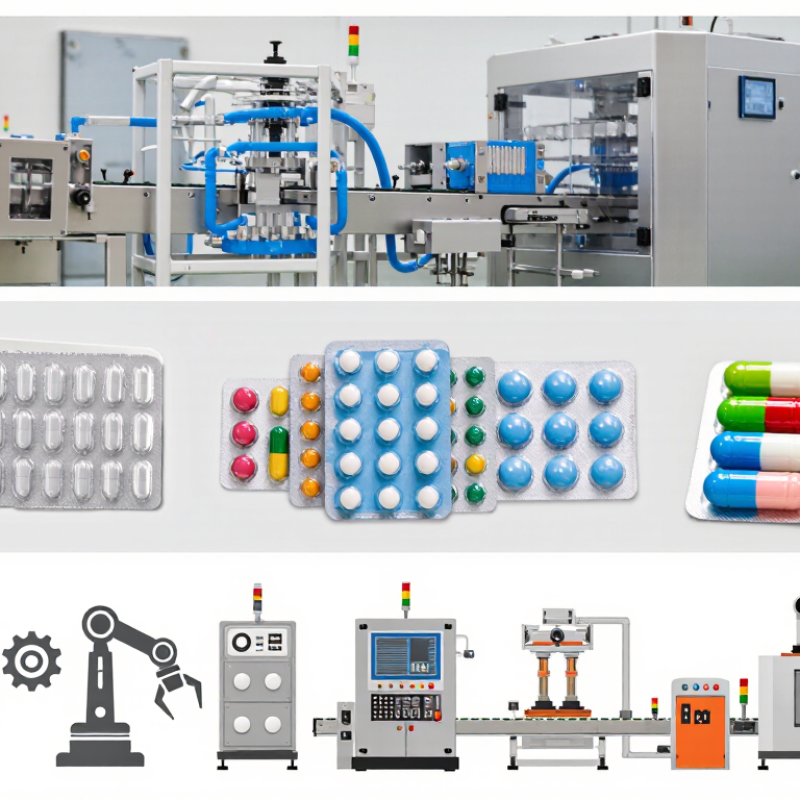
How to Choose a Blister Machine for Pharma Packaging?

Define Product and Packaging Requirements

Before choosing a blister machine, define the product in measurable terms. Record whether it is a tablet, capsule, or another dosage form, along with its dimensions, shape, and weight. Include fragile features, such as a scored tablet edge or a soft capsule shell. Small differences matter. A cavity that fits one product may pinch another.

Then specify what each package must protect against. Consider moisture, oxygen, light, and physical damage during transport. These needs affect the forming film, lidding material, cavity depth, and seal settings. For example, a moisture-sensitive tablet may need a higher-barrier structure than a product intended for short-term storage. Confirm material compatibility with product and packaging specialists. Do not assume a familiar film will suit every formulation.

Define pack details too: tablets per cavity, cavity layout, pack dimensions, print area, and opening method. A ten-tablet card may need a different pitch from a two-capsule pack. Note whether patients need clear product visibility or easy-to-open sections. It is easy to overlook this until samples are in hand. Ask suppliers to run representative product and materials, then inspect seals, cavities, and loading behavior. Document acceptable results and likely format changes. A fast line can still be the wrong choice if routine changeovers are awkward or product feeding is unreliable.

How to Choose a Blister Machine for Pharma Packaging?

Define Product and Packaging Requirements

Use the product’s sensitivity to moisture, oxygen, and light to guide material selection before specifying a blister machine. Ratings are qualitative comparisons of common material structures; actual performance depends on material thickness, coatings, forming, and sealing conditions. Confirm requirements with material data and product stability testing.

Compare Blister Machine Types and Formats

Blister machines differ mainly in how they form cavities and handle production speed. Thermoforming heats a plastic web, then shapes pockets with a mold. It suits many tablet and capsule formats and allows clear product visibility. Cold-forming uses a forming process that shapes aluminum laminate without heating the web. It can provide a stronger barrier against moisture and light, but usually creates opaque packs and needs more forming space.

The material affects the machine choice. PVC-based webs are common for transparent blisters, while coated structures can add barrier performance. Alu-alu packs use aluminum on both sides, so check that the machine can form the laminate and seal the lidding foil reliably. Cavity depth, tablet shape, and pack size also matter. A deep pocket may need different tooling from a shallow one.

Production style matters, too. Rotary machines can support higher output, while intermittent machines may offer flexibility across shorter runs and frequent format changes. Changeovers are not always as simple as a brochure suggests. Ask how long tooling replacement takes, and whether operators can adjust sealing temperature and pressure for each material. Run sample packs using the actual product and packaging materials. Inspect cavity fit, seal consistency, and finished-pack handling; a specification sheet cannot reveal every practical issue.

Evaluate Capacity, Materials, and Core Features

Grand View Research’s 2024 Blister Packaging Market report estimated the global market at USD 27.6 billion in 2023, with projected annual growth of 6.8% through 2030. That forecast signals demand, not a required machine speed. Size capacity around saleable packs per hour, rather than the headline rate. Account for changeovers, rejects, cleaning, and actual shift patterns. A machine rated at 300 blisters per minute may fall short after format changes. Run a trial with the intended product and operators. Small details matter.

Match forming materials to the product’s moisture, light, and handling needs. Thermoformed plastic can support clear product visibility; cold-form aluminum offers a stronger barrier but changes tooling and output considerations. Confirm forming depth, lidding-foil compatibility, and the sealing window with real materials. Check whether servo-driven indexing, in-line vision inspection, automatic reject handling, and readable batch coding fit the process. Ask how quickly operators can change formats and access parts for cleaning. I would still test this. Specifications rarely show every awkward adjustment. A short factory acceptance trial can reveal jams, seal variation, or inspection gaps before installation.

How to Choose a Blister Machine for Pharma Packaging: Capacity, Materials, and Core Features
Machine Configuration Indicative Operating Speed Typical Application Common Forming Materials Core Features to Evaluate Best-Fit Considerations
Manual or benchtop Low-volume, operator-dependent output; many units do not have a comparable automatic cycles-per-minute rating. Product development, laboratory trials, small batches, and packaging-feasibility work. Thermoformable films such as PVC or PET, subject to the machine’s tooling and heating capability. Simple temperature control, interchangeable tooling, guarded heating areas, and straightforward cleaning. Consider when flexibility and low setup cost matter more than repeatable high output. Confirm whether the unit can reproduce production-relevant forming and sealing conditions.
Semi-automatic Typically tens of cycles per minute; actual output depends on operator loading, cavity layout, and material. Clinical supplies, pilot production, smaller product runs, and operations with frequent changeovers. PVC and other compatible thermoformable films; lidding commonly uses heat-sealable aluminum foil. Adjustable forming and sealing controls, accessible change parts, process alarms, and clear operator guarding. Useful when production volumes do not justify a fully automatic line. Assess operator workload and whether product loading can be performed consistently.
Automatic, intermittent-motion Often approximately 20–100 cycles per minute, depending on the model, pack format, and product. Small-to-medium pharmaceutical production with regular batch packaging and controlled format changes. PVC, PVDC-coated PVC, and other validated thermoforming films; compatible lidding foil is selected for the sealing system. Automatic web feeding, forming and sealing stations, batch coding interface, product-feed options, and reject handling. Compare sustained production speed—not just maximum speed—and check that the machine can handle the required pack dimensions and changeover frequency.
Automatic, continuous-motion Often approximately 60–200 cycles per minute; product handling and sealing requirements can reduce achievable speed. Medium-to-high-volume tablet and capsule packaging where steady throughput is important. Thermoforming films such as PVC or PVDC-coated PVC; other films require confirmation of forming and sealing compatibility. Continuous web transport, synchronized feeding, temperature monitoring, in-process inspection options, and recipe-controlled settings. Evaluate the full line, including feeder performance, downstream cartoning, inspection, and planned operating shifts.
Cold-form aluminum configuration Speed is highly format- and machine-dependent; cold-forming generally has different cycle requirements from thermoforming. Products requiring a high-barrier blister pack, subject to product stability and packaging studies. Cold-form aluminum laminate for the formed cavity, paired with a compatible lidding material and validated sealing parameters. Suitable forming station and tooling, web-tension control, laminate handling, seal integrity controls, and inspection capability. Consider when barrier performance is a priority. Account for larger pack dimensions, material cost, forming-tool design, and product-specific stability requirements.
High-output automatic line Some specialized systems operate above 200 cycles per minute; this is not a universal rating and must be confirmed for the intended format. Large, established production volumes with standardized products and long production runs. Material options depend on the machine configuration; confirm compatibility with the exact forming web, lidding foil, and seal coating. High-capacity feeding, automated format change features, comprehensive alarms, inspection and rejection systems, and production data interfaces. Require a speed demonstration using representative product and packaging materials. Review changeover time, availability, maintenance access, and downstream line capacity.
Capacity calculation Approximate blister output per minute = cycles per minute × blisters produced per cycle. For example, 60 cycles per minute with 4 blisters per cycle gives a theoretical 240 blisters per minute before stops and rejects. Use the intended material structure and thickness when conducting production trials. Request rated speed, demonstrated sustained speed, changeover time, and expected operating efficiency as separate figures. Base the purchase decision on good packs per minute over the planned production period, not the cycle-speed figure alone.
Pharmaceutical controls Not a speed category; requirements should be defined for the facility and product. Applicable to equipment used in regulated pharmaceutical manufacturing. Confirm material specifications, supplier documentation, and product-specific packaging requirements. Documented installation and operational qualification support, recipe access controls, audit-trail features where required, cleaning access, guarding, and traceable batch coding. Confirm applicable regulations and validation responsibilities with the quality unit. Electronic-record features may require configuration and qualification to meet applicable requirements.
Capacity figures are indicative selection ranges, not guaranteed machine ratings. Actual output depends on the machine design, number of packs per cycle, product feeder, blister format, material, sealing conditions, inspection requirements, and operating conditions. Confirm performance with the intended product and packaging materials.

Verify Compliance, Validation, and Quality Controls

How to Choose a Blister Machine for Pharma Packaging?

Verify Compliance, Validation, and Quality Controls

A blister machine should produce repeatable seals, not just impressive output. Check that forming temperature, pressure, and dwell time are monitored and recorded. Confirm the system can detect missing tablets, damaged cavities, and poor seals, then reject affected packs automatically. WHO’s 2017 review estimated that about one in ten medical products in low- and middle-income countries is substandard or falsified. Packaging controls cannot prevent every quality failure, but they can reduce risks such as moisture ingress and mix-ups.

Ask for documented installation, operational, and performance qualification protocols. Validation should use your actual materials, product formats, and operating ranges—not only a demonstration run. Review calibration records, alarm histories, change controls, and electronic data safeguards. Check whether batch records show who changed settings and when. Apply relevant GMP requirements and electronic-record rules for your market. A polished dashboard is not proof of control. The evidence matters.

Tips: Run challenge tests with deliberately misaligned foil and missing tablets. Confirm reject bins are secure and alarms are visible at the operator’s station. Ask for sample validation records before purchase. One detail is easy to overlook: a fast line can still produce inconsistent seals after a material change. Make that scenario part of acceptance testing.

Assess Supplier Support, Operating Costs, and Maintenance

A blister machine should fit the realities of your production floor, not just its advertised speed. Ask suppliers how quickly they can provide remote troubleshooting, technician visits, and replacement parts. A clear response-time target is more useful than a vague promise of “full support.” Check whether operators receive hands-on training with actual changeovers, including forming tools, sealing settings, and routine cleaning. Small details matter.

Operating costs include more than the purchase price. Compare power use, compressed-air demand, packaging-material waste, and the labor needed for setup. Ask for estimates based on your typical batch size and product format. Then verify which assumptions those estimates use. A fast machine may still cost more per pack if it needs frequent adjustments or produces excess scrap. The spreadsheet can be misleading.

Maintenance access deserves a close look before installation. Inspect how easily staff can reach wear parts, sensors, and sealing components without removing large guards or waiting for specialist tools. Request a preventive-maintenance schedule, expected part lifetimes, and a sample service record. Also ask how support works after the warranty ends. That question is often missed. A practical supplier should explain both scheduled servicing and emergency assistance in plain terms. If possible, have your maintenance team review the machine layout before approval; they may spot an awkward access point that a sales demonstration does not reveal.