




Blog
China Top Fluidized Bed Processor Manufacturers?
Choosing among China’s top Fluidized Bed Processor manufacturers requires more than comparing product brochures. These machines influence drying, granulation, coating, and final product consistency. A reliable supplier should demonstrate practical experience with pharmaceutical, food, chemical, and nutraceutical applications. Buyers should examine airflow control, spray systems, temperature stability, chamber design, and cleaning access. Small details matter.
This guide evaluates leading Chinese manufacturers through engineering capability, production quality, customization support, and after-sales service. It considers whether suppliers provide factory documentation, material certificates, process testing, and clear validation support. A strong manufacturer should explain how its equipment handles moisture-sensitive powders, uneven particle sizes, and changing batch loads. Factory experience matters here. Site audits, sample trials, and customer references can reveal more than attractive specifications. However, public information is sometimes incomplete, and not every claimed advantage is independently verified. That limitation deserves attention.
The selected companies are not presented as universally superior. Their suitability depends on product characteristics, production scale, regulatory expectations, and available technical support. Some manufacturers may offer competitive pricing but limited international service. Others may provide advanced automation while requiring longer commissioning periods. This article helps readers compare these trade-offs with greater confidence. It also encourages careful questions about installation, operator training, spare parts, maintenance intervals, and performance acceptance tests. A thoughtful decision should connect equipment claims with measurable results, not assumptions. The best supplier is the one that fits the process honestly.
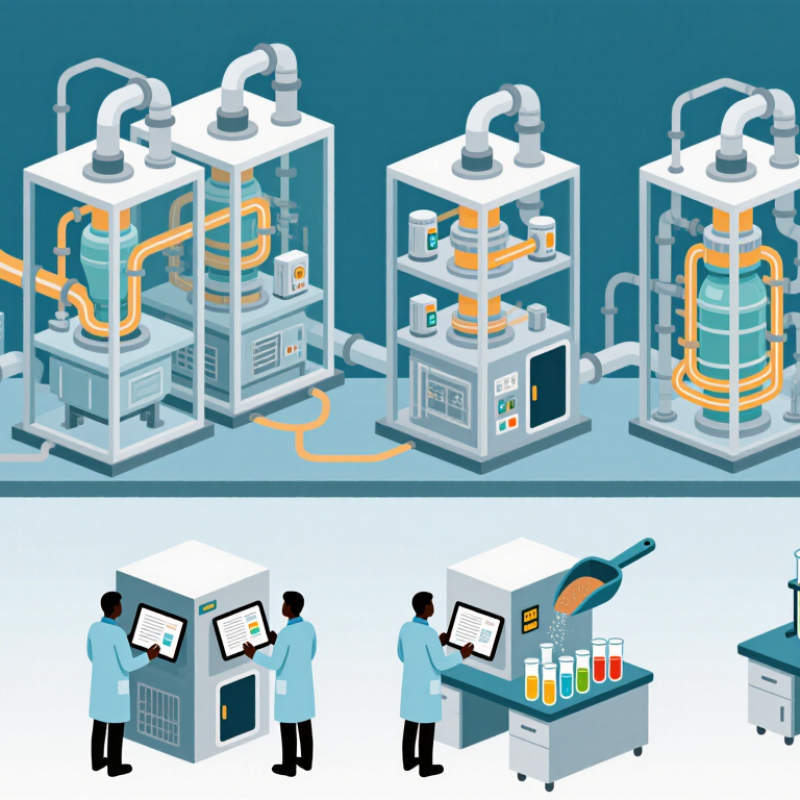
What Is a Fluidized Bed Processor?
What Is a Fluidized Bed Processor?
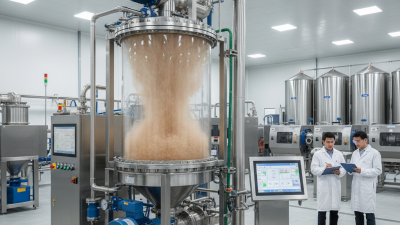
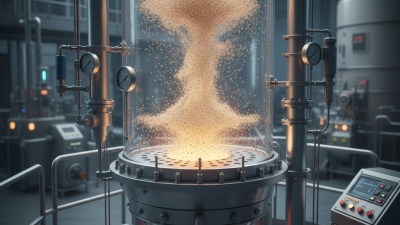
A fluidized bed processor suspends solid particles in an upward stream of heated or conditioned air. The particles behave like a moving liquid. This contact improves drying, granulation, coating, and controlled cooling. Inside the chamber, air passes through a perforated distributor plate while product movement creates rapid heat and mass transfer.
The equipment matters because moisture removal affects stability, flowability, and tablet compression. A 2024 Grand View Research report estimated the global fluidized bed dryer market at approximately USD 1.3 billion in 2023. It also projected a compound annual growth rate near 7.8% through 2030. These figures suggest stronger demand for controlled, scalable processing. Yet market growth does not guarantee suitable equipment. Poor airflow distribution can leave wet pockets, over-dry edges, or uneven coating.
In practical evaluation, manufacturers should provide airflow mapping, temperature uniformity data, and repeatable batch records. The U.S. FDA Process Validation guidance emphasizes process understanding, ongoing verification, and documented control. Operators should inspect filters, gaskets, spray nozzles, and grounding points before production. Small details matter.
Particle behavior is rarely identical between batches. That is where many specifications become too optimistic. Lab trials should measure inlet temperature, outlet temperature, humidity, product moisture, and processing time. A processor that looks efficient on paper may perform differently with fragile granules or sticky powders. Reliable selection combines engineering data, operator experience, cleaning requirements, and realistic production trials.
China Top Fluidized Bed Processor Manufacturers? - What Is a Fluidized Bed Processor?
| Data Dimension | Typical Information | Technical Description | Why It Matters |
|---|---|---|---|
| Equipment Definition | A process machine using upward-flowing air or gas | The gas stream suspends particles so that the product behaves like a fluidized bed. This improves heat and mass transfer between the particles and the process air. | It enables efficient drying, granulation, coating, and powder conditioning in one processing system. |
| Main Processing Functions | Drying, top-spray granulation, bottom-spray coating, and powder agglomeration | The same basic airflow principle can be combined with liquid spraying, heated air, dehumidified air, or controlled exhaust air. | Selecting the correct process configuration affects particle size, moisture content, density, solubility, and coating uniformity. |
| Common Product Forms | Powders, crystals, granules, pellets, and small solid particles | The product should have suitable particle size distribution, density, shape, and flowability for stable fluidization. | Very cohesive, sticky, or excessively large particles may require special air distribution, vibration, agitation, or a different process technology. |
| Typical Operating Temperature | Approximately 40–120°C for many heat-sensitive or general-purpose processes | The actual inlet and product temperatures depend on the material, solvent or water content, airflow, residence time, and thermal sensitivity. | Temperature control helps prevent degradation, discoloration, over-drying, sticking, or loss of active ingredients. |
| Moisture Removal | Designed to reduce free and surface moisture to a specified endpoint | Drying performance is influenced by inlet-air temperature, humidity, airflow rate, particle size, bed depth, and exhaust conditions. | A defined moisture endpoint supports product stability, storage life, compressibility, and downstream processing. |
| Airflow System | Fan, air filter, heater or dehumidifier, air distributor, and exhaust system | The air distributor must provide an even pressure profile so that the product fluidizes consistently across the processing chamber. | Uneven airflow can cause dead zones, channeling, excessive fines, poor drying uniformity, or unstable granulation. |
| Spray Configuration | Top spray, bottom spray, or tangential spray | Top spray is commonly used for granulation, bottom spray for coating, and tangential spray for pellet coating or layering. | Spray position, nozzle design, droplet size, and liquid feed rate directly influence agglomeration and coating quality. |
| Batch Capacity | Laboratory scale: grams to kilograms; production scale: tens to hundreds of kilograms or more | Usable capacity depends on bulk density, minimum fluidization velocity, working volume, and the required expansion of the bed. | Capacity should be selected from actual product characteristics rather than vessel volume alone. |
| Construction Materials | Commonly stainless steel for product-contact surfaces | Product-contact materials are selected for corrosion resistance, cleanability, mechanical strength, and compatibility with the process material. | Material selection affects hygiene, service life, contamination control, and maintenance requirements. |
| Control Parameters | Inlet temperature, outlet temperature, airflow, spray rate, product temperature, and process time | Modern systems may use programmable controls, temperature sensors, pressure monitoring, airflow regulation, and endpoint detection. | Accurate monitoring improves repeatability, reduces batch variation, and supports process validation. |
| Filtration Requirements | Air inlet filtration and product-retention filters | Filters prevent contamination from entering the process and minimize the loss of fine product particles through the exhaust stream. | Filter area, cleaning method, pressure drop, and filter material influence operating stability and recovery yield. |
| Cleaning and Hygiene | Manual cleaning, clean-in-place, or removable product containers | The cleaning approach depends on the product, manufacturing environment, equipment geometry, and allowable cross-contamination risk. | Good cleanability reduces downtime and supports hygienic production and changeover efficiency. |
| Safety Features | Temperature protection, pressure relief, grounding, interlocks, and dust-control measures | Fine powders can create combustible-dust hazards under certain conditions, so the system must be assessed according to the material and operating environment. | A documented hazard assessment is essential before selecting explosion protection, electrical classification, or containment measures. |
| Key Selection Criteria | Product properties, target throughput, process objective, cleaning method, control requirements, and safety conditions | A suitable system is normally chosen after evaluating particle-size distribution, bulk density, moisture, flowability, thermal sensitivity, and formulation behavior. | Technical trials are often needed to confirm fluidization behavior, drying time, spray performance, and final product quality. |
Note: Operating ranges are general industry reference values. Final equipment specifications should be established through product testing, process development, and a documented safety assessment.
Related Posts
-
China Top Fluidized Bed Processor Manufacturers
-
How to Choose a Fluidized Bed Processor for Your Needs?
-
China Best Fluidized Bed Processor Manufacturer
-
What is a Fluidized Bed Processor and How Does It Work for Efficient Material Processing?
-
What is a Fluidized Bed Processor and How Does It Work?
-

2026 How to Choose the Best Capsule Filling Plate for Your Needs?