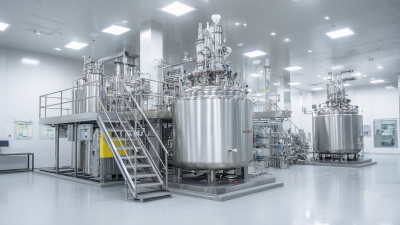
Why Choose a Fluidized Bed Processor for Your Manufacturing Needs?
In the rapidly evolving manufacturing landscape, the choice of processing equipment is crucial for efficiency and quality. Dr. Emily Thompson, a renowned expert in particle technology, emphasizes this by stating, "A Fluidized Bed Processor can revolutionize how materials are handled in manufacturing." This innovative machinery allows for uniform heating and drying, ensuring optimal processing conditions.
The Fluidized Bed Processor is designed to enhance product quality. It achieves this through controlled environments where particles are suspended in an upward flow of air or gas. This process not only improves heat transfer but also minimizes degradation of sensitive materials. Manufacturers utilizing this technology have observed significant improvements in consistency and performance.
However, adopting a Fluidized Bed Processor comes with challenges. Not all manufacturers may fully understand its operational complexities. Ensuring correct setup and maintenance requires skilled personnel. Understanding these nuances can lead to a smoother implementation. Thus, while the benefits are clear, careful consideration and expertise are necessary for successful integration into manufacturing processes.
Overview of Fluidized Bed Processing Technology
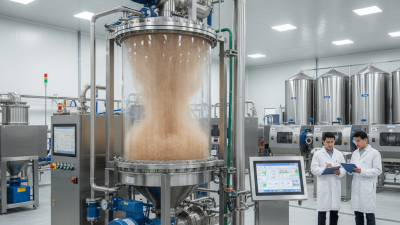
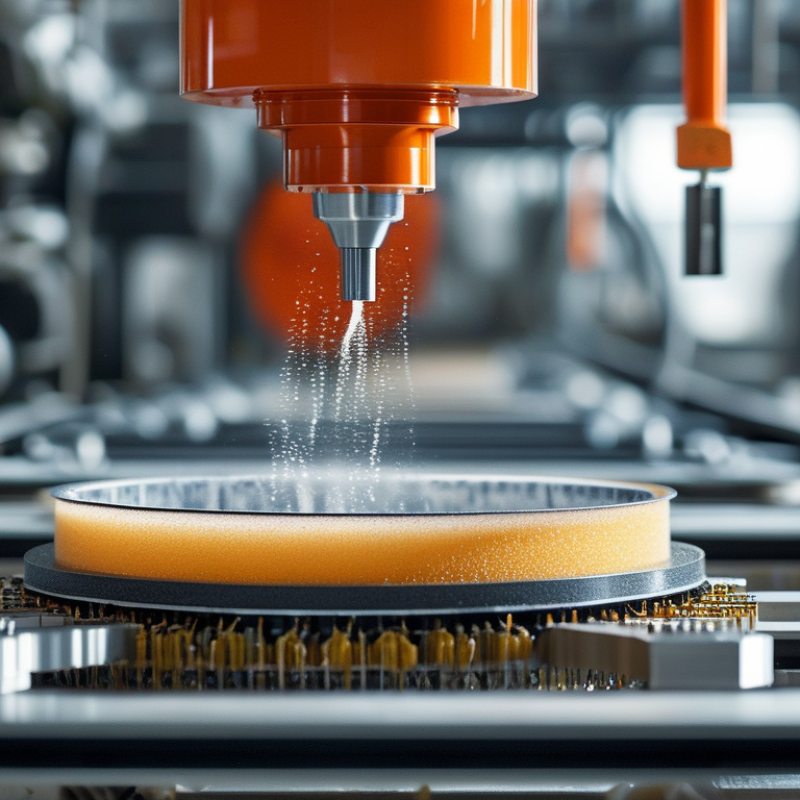
Fluidized bed processing technology offers a versatile solution for various manufacturing needs. This system operates by suspending granules in a stream of air, creating a state similar to boiling. It allows for even heat distribution, enhancing the efficiency of processes like drying, granulation, and coating. In industries where precision is key, this technology can significantly reduce batch-to-batch variability.
One interesting aspect is the simplicity of the setup. A fluidized bed can be integrated into existing production lines with minimal disruption. However, the operation requires careful monitoring to ensure optimal fluidization. If the airflow is too low or too high, it may lead to poor results. Additionally, while this technology is efficient, it may not be the best choice for all materials. Some substances may not fluidize well, leading to inconsistent product quality. Understanding these nuances is crucial for manufacturers considering fluidized bed processors.
Why Choose a Fluidized Bed Processor for Your Manufacturing Needs?
| Feature |
Advantage |
Applications |
| Uniform Particle Distribution |
Improves product consistency and quality |
Pharmaceuticals, Food Processing |
| Efficient Heat Transfer |
Reduces processing time |
Chemical Manufacturing, Granulation |
| Versatile Processing Options |
Supports drying, granulation, and coating |
Nutraceuticals, Agrochemicals |
| Scalability |
Easily adapts from lab to production scale |
Research and Development, Large-Scale Production |
| Reduced Dust Generation |
Enhances workplace safety |
Food Industry, Chemical Plants |
Advantages of Fluidized Bed Processors in Manufacturing
Fluidized bed processors offer unique advantages in manufacturing, particularly in industries such as pharmaceuticals and food production. A report from the International Journal of Pharmaceutics indicates that these systems can enhance mixing and heat transfer. This leads to improved product uniformity and more efficient processing. The ability to achieve rapid and even drying is crucial for maintaining the quality of sensitive materials.
Efficiency is a major benefit of fluidized bed technology. According to a study by the American Institute of Chemical Engineers, fluidized beds can operate with up to 50% lower energy consumption compared to traditional methods. This reduction is particularly important in today’s competitive market. However, companies should also be cautious. Not every material flows well in a fluidized state. Some powders may clog or require specific adjustments, leading to potential downtime during production.
Furthermore, scalability is an essential factor. Most fluidized bed processors are designed to handle varying batch sizes. This flexibility can support a shift from small pilot programs to large-scale production. Yet, the initial costs may deter some manufacturers. Companies must weigh these costs against the long-term savings and potential benefits.
Applications of Fluidized Bed Processors Across Industries
Fluidized bed processors are versatile tools used in various industries. In pharmaceuticals, they efficiently create granules for tablet formulations. The uniform temperature and mixing create high-quality products. This technology can also improve product bioavailability, which is vital for effective medications.
In the food industry, fluidized bed processors are used for drying powders and granules. This process ensures even moisture removal, preventing clumping and ensuring particle homogeneity. These processors can also coat food particles with flavors or nutrients, enhancing their appeal and nutritional value.
However, these machines are not without challenges. The initial setup costs can be significant. It may require adjustments in existing processes, leading to downtime. Manufacturers must weigh these factors against the long-term benefits. Careful evaluation is essential to determine if this technology aligns with their production goals.
Applications of Fluidized Bed Processors Across Industries
Key Considerations When Selecting a Fluidized Bed Processor
When selecting a fluidized bed processor, several key considerations stand out. One critical factor is the material properties. A thorough understanding of particle size distribution, density, and moisture content is essential. Reports indicate that a 0.5% variance in moisture content can significantly impact the efficiency and uniformity of the final product.
Another consideration is the scale of operation. For small to medium-sized projects, batch fluidized bed processors might be beneficial. They offer flexibility and ease of cleaning, crucial for changing product lines frequently. For larger operations, continuous fluidized bed systems are more efficient and can improve production rates by up to 30%, according to industry studies.
Moreover, energy consumption is an important metric. Efficient processors can reduce energy usage by 20% compared to traditional drying methods. However, not all fluidized bed processors are designed with energy efficiency in mind. The initial cost versus long-term savings should be carefully analyzed. Additionally, while aiming for high throughput, monitoring for potential issues like uneven fluidization is vital. Achieving uniformity often requires fine-tuning process parameters, which can be a challenging task. Balancing these factors is essential for optimizing manufacturing processes.
Maintenance and Operational Efficiency of Fluidized Bed Equipment
Fluidized bed processors are increasingly favored in manufacturing due to their efficiency and flexibility. These systems utilize a combination of airflow and powdered materials, creating a “fluidized” state. This process enhances uniformity in mixing and drying, making it ideal for various applications. The complexities of maintaining fluidized bed equipment do require careful attention. Routine checks on air distribution and particle behavior are crucial. Neglecting these elements can lead to operational inconsistencies.
When considering maintenance, accessibility is vital. Well-designed equipment allows for easier inspection and cleaning. This reduces downtime significantly. However, operators must be trained to recognize signs of wear or malfunction. Regular maintenance schedules should be established, even if systems appear to be functioning well. Unexpected issues can arise, impacting productivity. Monitoring equipment closely ensures that small problems are addressed before they escalate.
Ensuring operational efficiency involves investing time in employee education and system upgrades. While fluidized bed processors excel in various tasks, they are not devoid of challenges. Operators must remain vigilant. Understanding the intricacies of the equipment will lead to better handling and a more productive environment. The balance between efficiency and maintenance is delicate yet critical for sustained success.