How to Choose the Right Powder Milk Mixer for Your Needs?
Choosing the right Powder Milk Mixer is essential for achieving quality results. Each mixer type differs in design and functionality. You may feel overwhelmed with options available today.
Consider your needs carefully. Think about your production scale. Do you need a large mixer or a smaller one? The right size can make a big difference in efficiency. Also, check the mixer’s power and speed settings. These features impact how well the powder blends.
Quality matters too. Some mixers are built to last, while others may not endure heavy use. Reflect on how often you will use the mixer. Investing in a durable model can save you money long-term. You want a reliable machine that minimizes downtime, ultimately leading to better productivity.
Understanding Different Types of Powder Milk Mixers Available in the Market
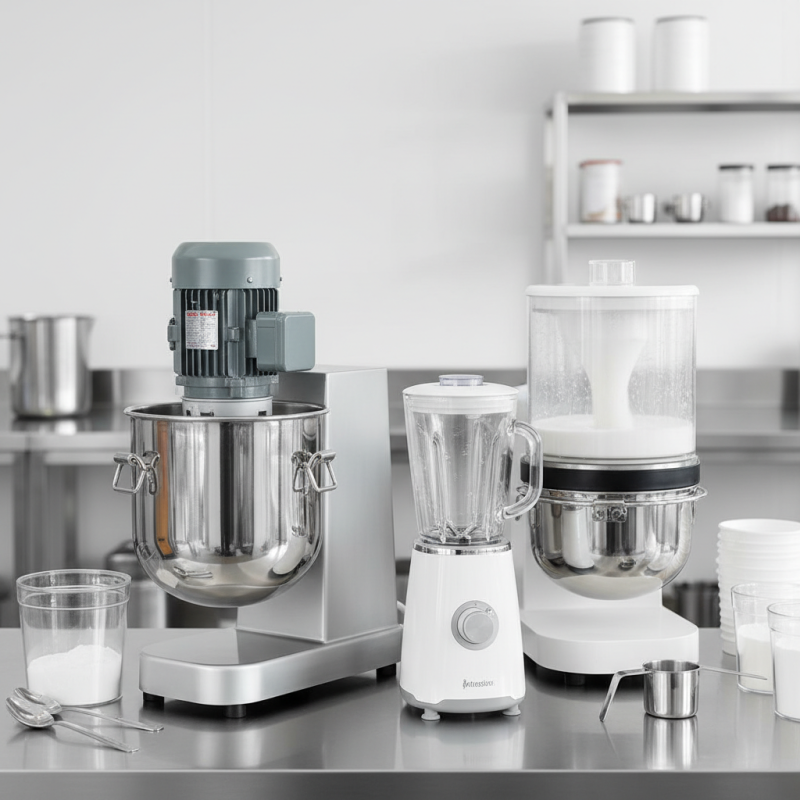
When choosing a powder milk mixer, it is essential to understand the various types available on the market. Each type has its features and benefits, catering to different needs. A handheld mixer is compact and easy to store. It is ideal for smaller batches and quick mixing tasks. However, it may not handle larger volumes efficiently.
On the other hand, a stand mixer offers more power and stability. It is perfect for mixing larger quantities of powder milk. The bowl design allows for easier incorporation of ingredients. Yet, it can occupy significant counter space, which might be a limitation for some users. Additionally, the mixing speed should be considered, as not all mixers blend at the same pace.
Some mixers include specialized attachments, like whisks or dough hooks, which can be useful. But having too many attachments can also lead to confusion. Users might find it challenging to select the right one for their task. Consider your specific requirements before making a choice. Always reflect on how often you’ll use the mixer and for what purposes. This can help avoid the pitfalls of buying more than you need.
Key Features to Consider When Selecting a Powder Milk Mixer
When selecting a powder milk mixer, several key features come into play. First, consider the size and capacity of the mixer. A larger mixer can save time when handling big batches. However, it may occupy more space. Assess your production needs carefully. Noise levels are another concern. Some models operate quietly, while others can be quite loud. This factor affects both comfort and the working environment.
The mixing efficiency is crucial. Look for features like adjustable speed settings and mixing technology. These offer flexibility for different powder types. Furthermore, ease of cleaning is essential. Ideally, a mixer should have a design that simplifies maintenance. Detachable parts can also help.
A durable construction ensures longevity. Stainless steel materials are often preferred for their strength. Always double-check the warranty terms too. It reflects the manufacturer’s confidence. While some mixers may seem pricey, a good investment pays off through reliability. Strive for a balance between cost and quality to meet your specific needs.
Evaluating Mixer Capacity: Finding the Right Size for Your Production Needs
Choosing the right mixer capacity is crucial for efficient powder milk production. A mixer that is too small can lead to inefficient blending. According to industry data, a well-sized mixer can increase production efficiency by up to 30%. In contrast, an oversized mixer can waste energy and space. Therefore, evaluating your production needs is essential.
Consider your average daily output. If your facility processes 1,000 kg of powder milk daily, a mixer with at least 300 to 500 liters capacity may suffice. However, fluctuations in demand can complicate this. On busy days, a larger mixer can handle peaks, while smaller capacities might be needed for quieter periods. This inconsistency often leads manufacturers to rethink their capacity choices.
Additionally, the mixer’s design matters. Older models might have slower blending times. Modern alternatives utilize advanced technologies, promoting faster and more uniform mixing. This shift can reduce mixing times by 20-40%, according to recent studies. It’s essential not to overlook these advancements when evaluating mixers, as they can significantly impact overall productivity.
Assessing Mixing Efficiency: The Importance of Speed and Dispersion
When selecting a powder milk mixer, mixing efficiency is critical. That efficiency often hinges on speed and dispersion. A faster mixer can reduce clumping and enhance consistency. But, speed is not the only factor. The design of the mixing blades also plays a significant role.
Consider the dispersion capabilities of different mixers. Some may excel in breaking down powder while others might struggle. Uniform mixing is essential for product quality. An uneven mix can lead to inconsistent flavor or texture, which is unideal. It requires close attention to evaluate how well a mixer distributes powder throughout the liquid.
However, it's vital to test various mixers. Not all machines deliver perfect results. Sometimes, the ideal speed doesn't yield the desired dispersion. You might encounter challenges such as overheating or uneven texture. Thus, experimentation and observation are key. By understanding both speed and dispersion, you can make informed decisions on the right mixer for your needs.
Cost-Benefit Analysis: Investing in Quality vs. Budget Options for Mixers
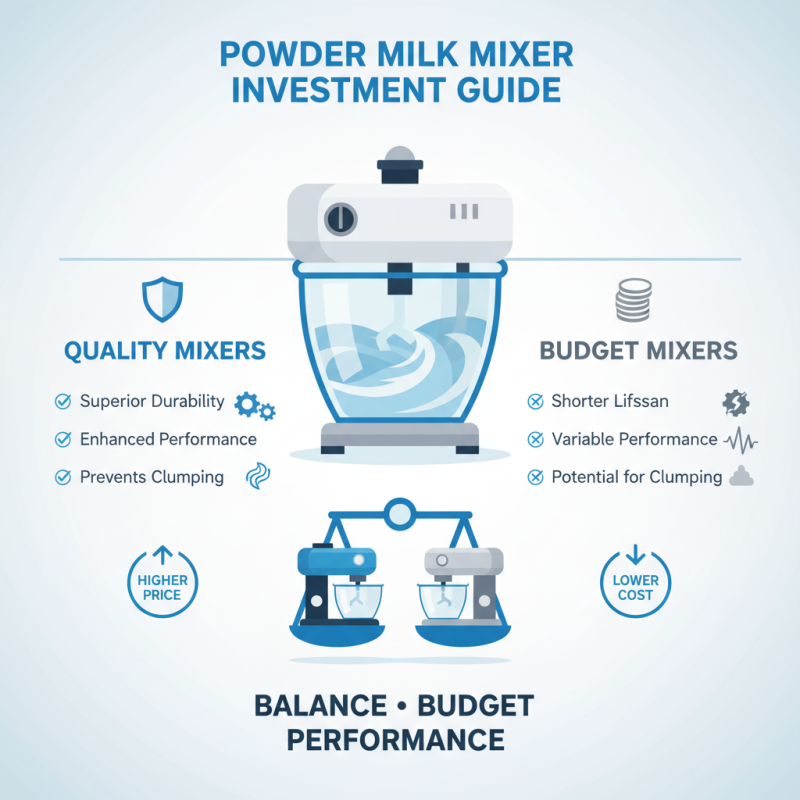
Investing in a powder milk mixer involves weighing quality against budget constraints. High-quality mixers often offer better durability and performance. They can handle various types of powders efficiently. For instance, a sturdy mixer may minimize clumping, which is crucial in production settings. However, their price tags can be significant.
On the other hand, budget options are tempting. They can serve basic needs without breaking the bank. Yet, these mixers might compromise efficiency and lifespan. A lower price often means more frequent replacements. This can add up over time. You may find yourself spending more in repairs. It's essential to assess your production needs carefully.
Consider the scale of your operation. If you're mixing large quantities, a quality mixer could be worth the investment. Reflect on how much you value consistency in your products. Would a few extra dollars make a difference in your output? Sometimes, saving a little today can lead to more significant costs tomorrow. Balancing price and quality requires thoughtful consideration of your specific needs and goals.