
Blog
How to Choose a Capsule Packaging Machine?
Choosing a Capsule Packaging Machine is not just a matter of comparing speed figures. The right choice depends on capsule size, fill material, production volume, and the way operators will clean and maintain the line. A machine that runs smoothly during a short test may behave differently across a full shift. Small details matter: hopper access, changeover time, dust control, and how clearly the controls display a fault.
As a practical selection principle, packaging engineer Maya Chen puts it this way: “Choose for the production day you actually run, not the speed you hope to reach.” Buyers should compare verified output with their real batch sizes and staffing, then ask suppliers to demonstrate changeovers using representative materials. Check which capsule formats the machine supports, what tooling is included, and how service, spare parts, and operator training are handled. A neat brochure cannot answer every question.
There is no perfect machine for every plant. A compact model may suit varied batches, while a higher-output system may fit steady, repeatable runs. And one point deserves a second look: the fastest option can become costly if setup takes too long or cleaning disrupts production. This guide explains how to assess capacity, compatibility, automation, quality checks, and supplier support before making a decision. The aim is a reliable fit, not an impressive specification sheet.
Define the Product and Its Capsule Packaging Requirements
How to Choose a Capsule Packaging Machine?
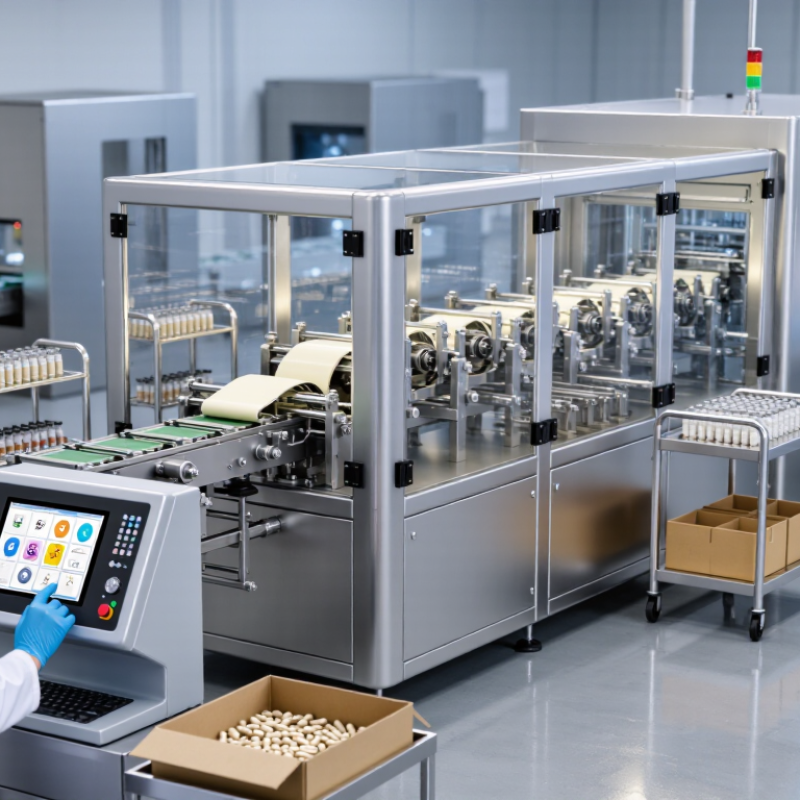
Define the Product and Its Capsule Packaging Requirements
Start with the capsule, not the machine. Record its size, shell material, fill weight, and shape, then note whether it chips, sticks, or deforms during handling. A hard gelatin capsule may need different feeding and orientation settings from a moisture-sensitive plant-based shell. Define the finished pack too: bottle, blister, or another format; units per pack; and required output per minute. Measure actual production batches, not just the best-case target.
Packaging details affect machine selection. Specify the acceptable count variation, changeover frequency, cleaning method, and available floor space. Check how capsules move through feeding, counting, and transfer points; narrow chutes or sharp drops can cause jams or damage. Grand View Research valued the global pharmaceutical packaging market at USD 124.34 billion in 2023, reflecting the scale and variety of packaging needs. That figure is broad market context, not a machine-sizing guide. A small uncertainty is normal: run trials with your own capsules before setting final performance requirements.
Tips: Bring several production lots to a supplier trial. Record feed rate, damaged capsules, count accuracy, and changeover time. Keep the results; memory is a poor measuring tool.
Identify Machine Types and How Their Filling Systems Work
Capsule packaging machines range from manual and semi-automatic units to fully automatic production lines. Manual models suit trials and small batches, but operators must separate capsule bodies, fill them, and close each shell by hand. Semi-automatic machines handle some steps mechanically while an operator loads capsules or checks alignment. Automatic machines feed, orient, separate, fill, and close capsules in a continuous cycle. Their higher output can be useful, though setup and cleaning take time.
Filling systems affect both dose consistency and product handling. In a tamping-pin system, powder falls into a dosing disc, where pins compress it into small plugs before transfer into capsule bodies. This can work well with free-flowing powders, but changes in particle size or moisture may affect dosing. A dosator system uses a hollow tube to collect a measured powder plug and place it into the capsule. It can suit formulations that need controlled compaction. Liquid-filling systems use pumps or metering devices to deliver a set volume, and often require checks for leakage and sealing. Small details matter. A machine’s rated speed alone says little about real output; operators should test the intended capsule size and formulation under realistic conditions. Not always. A slower machine may prove easier to clean and more consistent for a particular product.
How to Choose a Capsule Packaging Machine?
Indicative output ranges differ by capsule size, product, and machine configuration. Compare the filling system as well as the stated production speed.
Filling systems: Manual machines rely on the operator to separate capsules and load the fill. Semi-automatic machines mechanize steps such as dosing while requiring operator handling. Automatic machines typically coordinate capsule orientation, separation, dosing, closing, and ejection. Confirm the machine’s filling method—such as tamping or dosator dosing—matches your powder, pellets, or other fill material.
Output figures are broad, indicative equipment ranges, not guaranteed rates. Check tested throughput and changeover requirements for the specific capsule size and formulation.
Match Production Capacity, Accuracy, and Automation to Your Needs
Choose a capsule packaging machine around your actual production demand, not an ideal forecast. Measure the number of capsules handled per shift, including changeovers, cleaning, and routine pauses. A machine’s rated speed may look impressive, but sustained output can be lower when operators reload materials or adjust settings. Ask how performance changes with your capsule sizes and packaging format. Measure actual demand.
Accuracy matters at every stage. For bottle lines, check counting consistency and how the system detects missing or damaged capsules. For blister lines, examine pocket formation, sealing quality, and inspection controls. Request trial runs using representative materials, then review sample packs and reject rates. A few minutes of testing can reveal problems a specification sheet cannot. Keep in mind that accuracy also depends on setup and maintenance; automation cannot correct every poor process.
Match automation to your team’s skills and production pattern. Automatic feeding, counting, and inspection can reduce repetitive handling, while a simpler setup may be easier to clean and adjust for short runs. Consider how quickly staff can change formats and reach components that need regular attention. Controls should display clear alarms and record useful production data. More automation is not always better. I would compare the time saved with the added setup, training, and service needs before choosing a configuration.
Check Material Compatibility, Cleaning, and Regulatory Requirements
How to Choose a Capsule Packaging Machine?
Check Material Compatibility, Cleaning, and Regulatory Requirements
Match the machine to the capsule shell and fill material. Gelatin and plant-based shells can respond differently to humidity, heat, and handling. Powders may bridge in a hopper, while oily fills can leave stubborn residue. Fit matters. Ask for trials using your actual capsule size and product, not just a similar sample. Check that the dosing system fills consistently without cracking shells or leaving excessive powder around the seam.
Cleaning affects both product quality and changeover time. Look for accessible contact parts, clear disassembly instructions, and surfaces that are easy to inspect. Narrow channels and hidden ledges can retain residue. Ask how cleaning is documented and whether your team can verify the process. A polished exterior is not proof of clean internals. Requirements vary by product and market, so confirm applicable hygiene, documentation, and equipment rules with qualified regulatory staff before purchase.
Tips: Request written material specifications, cleaning guidance, and relevant compliance documents. Keep records. Include operators in the review; they may spot awkward parts or missed cleaning steps. A checklist helps, but it can still overlook a real production issue. Test the setup under realistic conditions before committing.
How to Choose a Capsule Packaging Machine? — Check Material Compatibility, Cleaning, and Regulatory Requirements
| Selection Dimension | What to Check | Practical Acceptance Criteria | Why It Matters |
|---|---|---|---|
| Process and machine type | Identify whether the operation is capsule filling, capsule counting and bottling, blister packing, or another downstream packaging step. | Confirm the machine performs the required operation and connects with upstream and downstream equipment, such as a deduster, inspection unit, bottle line, or cartoner. | Machines designed for different stages are not interchangeable, even when each is described as a capsule packaging machine. |
| Capsule compatibility | Check capsule material, size, shape, and condition. Common shell materials include gelatin and hydroxypropyl methylcellulose (HPMC); available capsule sizes vary by application. | Test the actual capsule types and size range on the proposed equipment. Verify feeding, orientation, transfer, and closure without excessive damage or jams. | Shell properties and capsule dimensions affect handling, separation, filling, counting, and sealing performance. |
| Product compatibility | For filling equipment, assess the formulation’s flow, particle size, bulk density, moisture sensitivity, and tendency to bridge, stick, or generate dust. | Run representative product trials. Confirm that the dosing method suits the formulation and that product-contact components are appropriate for the product and cleaning process. | Powders, pellets, granules, and other fills can behave differently and may require different dosing or containment arrangements. |
| Packaging materials | For bottle or blister lines, identify the intended containers, closures, lidding films, and other packaging components. | Test the actual component dimensions and material specifications. Verify feeding, forming or sealing where applicable, closure application, and finished-pack integrity. | Packaging components can differ in dimensions and material properties, which affects reliable feeding and pack quality. |
| Product-contact materials | Review the materials and surface finishes of all parts that contact the product, including hoppers, dosing parts, and transfer paths. | Obtain material specifications and confirm suitability against product requirements, cleaning agents, and applicable product-contact rules in the target market. | Contact materials should not adversely affect the product and must be compatible with the intended cleaning and operating conditions. |
| Cleaning and changeover | Assess access to product-contact areas, removable parts, tool requirements, cleaning instructions, and changeover steps. | Review documented cleaning procedures and verify that parts can be inspected and cleaned effectively. Establish cleaning verification or validation as required by the site’s quality system. | Effective cleaning helps control carryover, contamination, and mix-ups when products or batches change. |
| Dust and containment | Consider dust generation, operator exposure, product loss, and any containment needs, particularly during filling and transfer. | Assess the equipment’s dust-control provisions and confirm they suit the product’s hazard assessment and the facility’s containment strategy. | Appropriate dust management supports worker protection, housekeeping, and product quality. |
| Output and accuracy | Define required good packs per minute or filled capsules per hour, expected operating hours, and acceptable quality limits. | Compare documented performance under conditions representative of the intended product and pack format. Include setup, stoppages, and rejects when estimating usable output. | Nominal speed alone does not show whether a machine can meet production needs while maintaining the required quality. |
| Inspection and rejection | Determine which defects need to be detected, such as missing or damaged capsules, incorrect counts, or packaging defects. | Verify the inspection method, rejection mechanism, and challenge-test approach for the defects relevant to the process. | Inspection and controlled rejection help prevent nonconforming packs from reaching the next process or the market. |
| Regulatory and quality-system fit | Identify the product category, manufacturing location, sales markets, and applicable site procedures and regulations. | Confirm requirements with the quality and regulatory teams. For pharmaceutical operations, assess applicable GMP expectations; for other products, determine the rules that apply to that product and jurisdiction. | Regulatory obligations depend on the product, process, and market; one checklist cannot replace a jurisdiction-specific assessment. |
| Electronic records and controls | Review software functions, user access, audit trails, electronic records, and data export where these features are used for regulated records. | Document which records the system creates and assess applicable electronic-record requirements, such as 21 CFR Part 11 or EU GMP Annex 11 where relevant. | Electronic-system controls are relevant when computerized functions are used to create or maintain regulated records; applicability should be determined by the quality system. |
| Qualification and documentation | Ask what technical documents, operating manuals, maintenance instructions, drawings, and qualification support are available. | Agree on user requirements and the scope of installation, operational, and performance qualification activities before purchase. | Clear documentation and planned qualification help demonstrate that the installed equipment is suitable for its intended use. |
| Utilities and facility fit | Check footprint, access for maintenance, electrical supply, compressed air, extraction, and environmental conditions. | Compare the machine’s documented utility and installation requirements with the facility. Confirm service access and material-flow routes. | Facility mismatches can delay installation, complicate maintenance, or limit reliable operation. |
| Supplier support and lifecycle | Assess training, spare-parts availability, preventive-maintenance guidance, service response, and software or control-system support. | Request written service and spare-parts information and define support expectations for the expected operating life of the equipment. | Maintainability and support affect downtime, operating cost, and the ability to keep the machine in a qualified state. |
Compare Total Costs, Maintenance Needs, and Supplier Support
When comparing capsule packaging machines, look beyond the purchase price. A lower quote can exclude tooling, installation, training, or format-change costs. Estimate cost per production hour, including labor, rejected capsules, energy, and planned downtime. Ask for a written list of included parts and service visits. That adds up. A machine that takes 40 minutes to clean between runs may reduce usable shift time. Compare that estimate with your actual batch sizes and changeover frequency; supplier projections may not match your schedule.
Maintenance needs are easier to assess with a sample service plan. Check lubrication points, wear parts, access panels, and whether operators can safely clear minor jams. Ask how often seals, dosing components, and sensors need inspection, and what skills repairs require. Keep a realistic spare-parts budget. Request response-time targets, remote support hours, technician availability, and parts-shipping estimates in writing. A reliable supplier explains operating limits clearly rather than promising zero downtime. If possible, speak with a current user about support after installation. Small details matter. Leave room for surprises; real production rarely matches a perfect spreadsheet.
Related Posts
-
Why Choose a Capsule Packaging Machine?
-
Top Capsule Filling Plate Manufacturers for Global Buyers
-
Why Choose an Automatic Capsule Filling Machine?
-
Common Issues Faced by Businesses When Choosing Capsule Packaging Machines
-
What is a Capsules Filling Machine? Benefits, Types, and How It Works
-
2026 Top Capsules Filling Machine Trends and Innovations?