How to Choose the Best Syringe Assembly Machine for Your Needs?
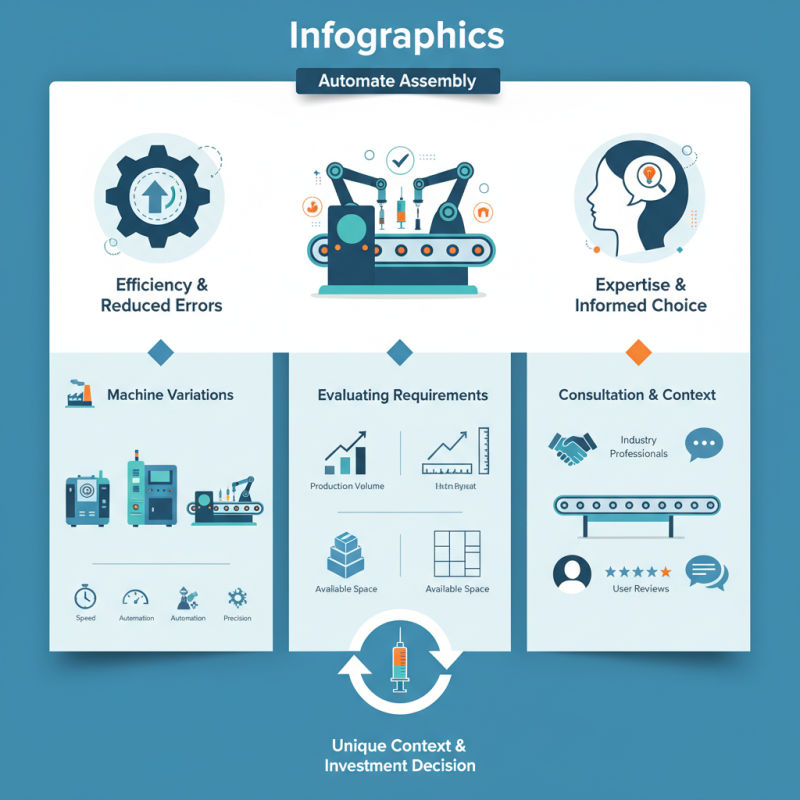
When selecting the best Syringe Assembly Machine, expertise is vital. Dr. Emily Chen, a leading expert in medical device manufacturing, emphasizes, "The right machine can enhance efficiency and reduce errors." This statement underscores the importance of making an informed choice.
Syringe Assembly Machines come in various shapes and sizes. Features like automation, speed, and precision vary significantly. Understanding these specifications can be overwhelming. Each machine might serve different needs, from small-scale operations to large production lines.
Evaluating your specific requirements is crucial. Consider factors such as production volume and available space. Additionally, consult with industry professionals and seek user reviews. Sometimes, what works for one company may not be suitable for another. It’s essential to reflect on your unique context when making this investment.
Understanding the Different Types of Syringe Assembly Machines
Choosing the right syringe assembly machine can be a daunting task. Understanding the various types available is crucial. Generally, there are three main categories: manual, semi-automatic, and fully automatic machines. Each type has its advantages and limitations, depending on your production scale and specific requirements.
Manual syringe assembly machines require operator involvement at every stage. They may be suitable for small-scale operations or initial prototypes. However, the speed and efficiency are limited. Semi-automatic machines bridge the gap, providing some automation while still requiring operator input. They can increase production rates but might not meet high-volume demands.
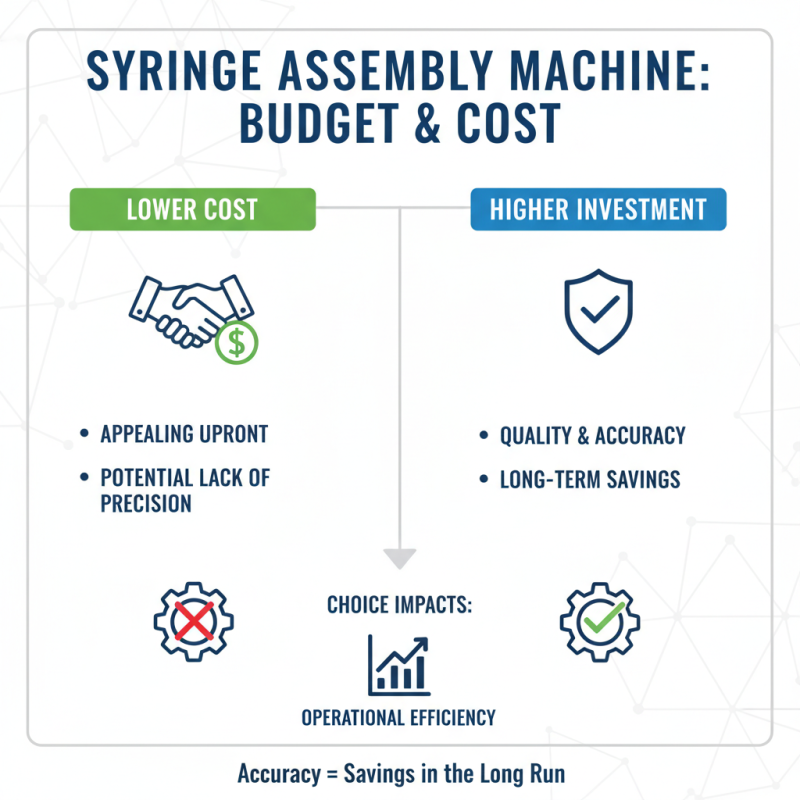
Fully automatic machines offer the greatest efficiency and consistency. They minimize human error and optimize production times. Yet, they come at a higher initial cost and may require more extensive maintenance. Evaluate your needs and resources carefully. Investing in equipment that may not match your production volume can lead to wasted resources. It’s essential to reflect on your long-term production goals and current market demands.
How to Choose the Best Syringe Assembly Machine for Your Needs?
| Type |
Production Speed (Units/Min) |
Accuracy (%) |
Automation Level |
Ideal For |
| Manual |
10-15 |
90 |
Low |
Small scale production |
| Semi-Automatic |
20-30 |
95 |
Medium |
Medium scale production |
| Fully Automatic |
50-100 |
99 |
High |
Large scale production |
| Customizable |
Varies |
Varies |
Variable |
Specific requirements |
Key Features to Consider When Choosing a Syringe Assembly Machine
When selecting a syringe assembly machine, several key features deserve careful consideration. The machine's speed is critical. A high-output machine reduces production time. However, balancing speed with quality is essential. Fast machines can compromise the accuracy of assembly if not calibrated well.
Another vital aspect is versatility. A good syringe assembly machine should handle various syringe sizes and designs. This flexibility can save costs in the long run. However, ensuring that it meets specific requirements for each type can pose challenges. Regular calibration and maintenance are crucial for consistent performance.
User-friendliness is equally important. Operators should easily understand controls and settings. Complex machinery can lead to operator errors. Training staff thoroughly might be necessary, adding to operational costs. Look for a machine that offers an intuitive interface. Finally, consider support and maintenance options from the manufacturer. Knowing help is available can provide peace of mind, especially during troubleshooting.
Evaluating Production Capacity and Efficiency Requirements
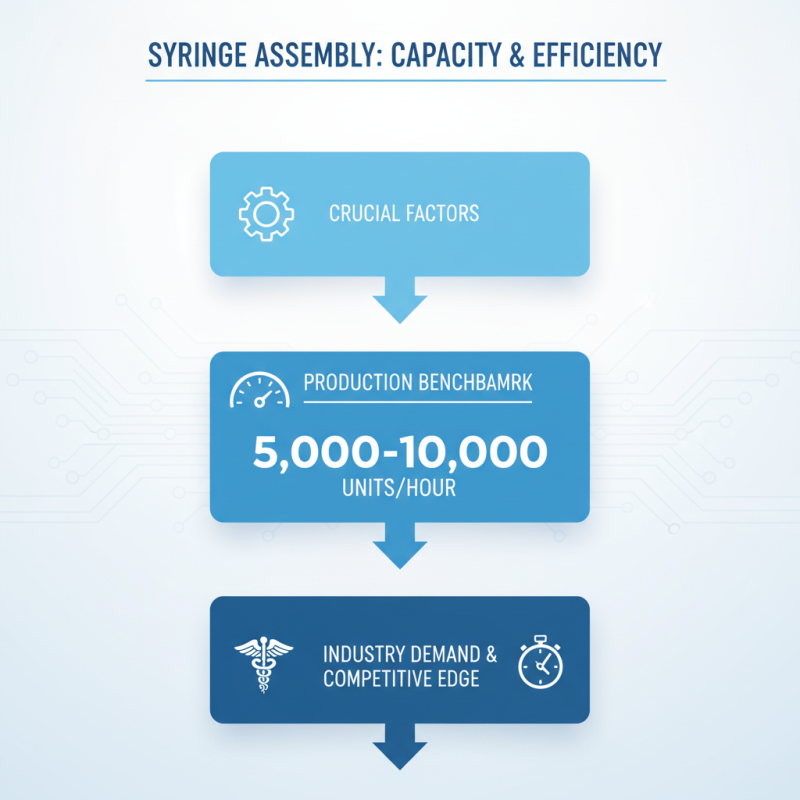
When selecting a syringe assembly machine, production capacity and efficiency are crucial factors. A recent industry report indicated that manufacturers prioritize machines that can handle 5,000 to 10,000 units per hour. These numbers are not just benchmarks but reflect current market demands for speed and volume. In environments like pharmaceuticals, such efficiency ensures a competitive edge.
Efficiency means more than speed. It also involves the machine's reliability during operations. Consistent performance often leads to lower overhead costs and reduced waste. According to studies, a well-integrated assembly system can reduce operational costs by up to 20%. However, many businesses overlook the maintenance and training aspects associated with these machines. Regular upkeep and skilled operators are key to retaining efficiency.
Choosing the right machine is a balancing act. Overestimating your production needs can lead to wasted investment. On the other hand, undervaluing capacity could affect your output significantly. Understanding your specific production environment and capability can guide the decision. Each facility has unique limitations and requirements that cannot be ignored. Evaluating these factors thoroughly will lead to more strategic decisions in the long run.
Importance of Maintenance and Support Services in Equipment Selection
When selecting a syringe assembly machine, maintenance and support services are crucial. Effective maintenance can enhance machine longevity and reliability. According to industry reports, over 30% of machinery downtime is due to lack of proper maintenance. This statistic underscores the importance of ongoing support.
Regular maintenance can prevent small issues from becoming major problems. For example, a minor calibration error can lead to a 5% variance in dosage accuracy. This can have serious implications in pharmaceutical production. Support services provide guidance in optimizing performance and can save significant costs in repairs.
Assessing the availability of maintenance services is essential. Some manufacturers lack comprehensive support. This could lead to longer response times during emergencies. In a field where precision is paramount, swift and reliable support is a necessity. A machine that is difficult to maintain may seem cheaper initially, but it could cost more in the long run. Choosing the right machine involves considering not only its features but also the surrounding ecosystem of support and maintenance.