2026 How to Choose the Best Powder Mixers for Your Needs?
Choosing the right powder mixers can be a daunting task. In an industry that demands precision and efficiency, selecting the best equipment is crucial. Industry expert Dr. Emily Thompson, a leading figure in powder processing technology, once stated, "The right powder mixer can significantly enhance product consistency and reduce production time." This insight underscores the importance of making an informed decision.
When evaluating powder mixers, consider the specific needs of your operation. Factors such as batch size, desired mixing speed, and material types play a vital role in your choice. You want equipment that not only meets your current requirements but also adapts to future needs. Remember, an ill-fitting mixer may lead to inconsistent results and wasted resources.
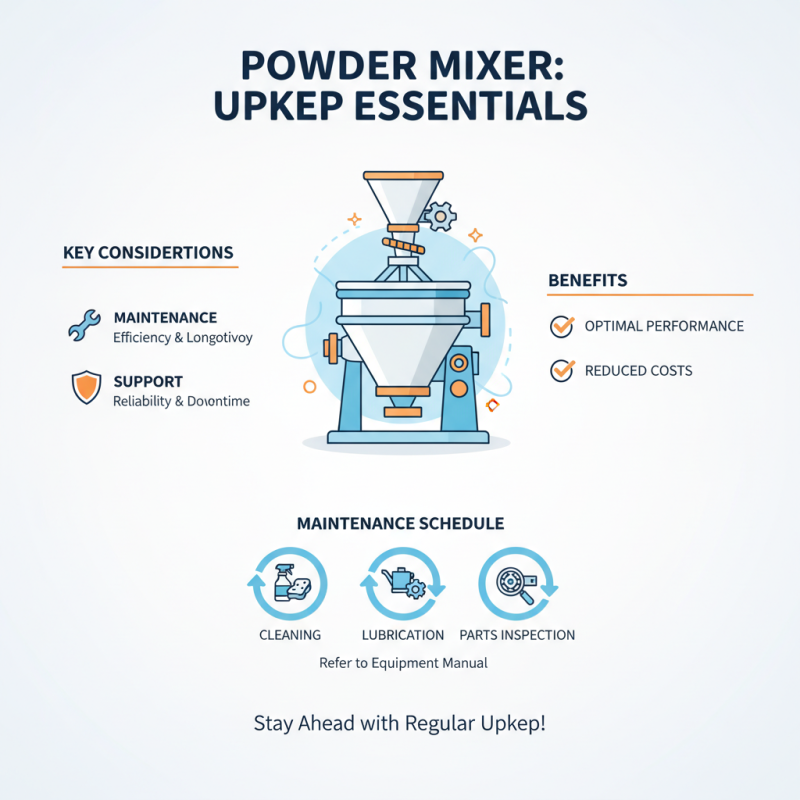
Moreover, many users overlook the importance of maintenance. Reliable powder mixers require regular checks to ensure optimal performance. Failing to address this can impact mixing quality over time. It's worth reflecting on whether your current equipment has been regularly updated or if you've stuck with outdated technology. The journey to finding the ideal powder mixer may be challenging, but it's essential for achieving excellence in production.
Types of Powder Mixers and Their Applications
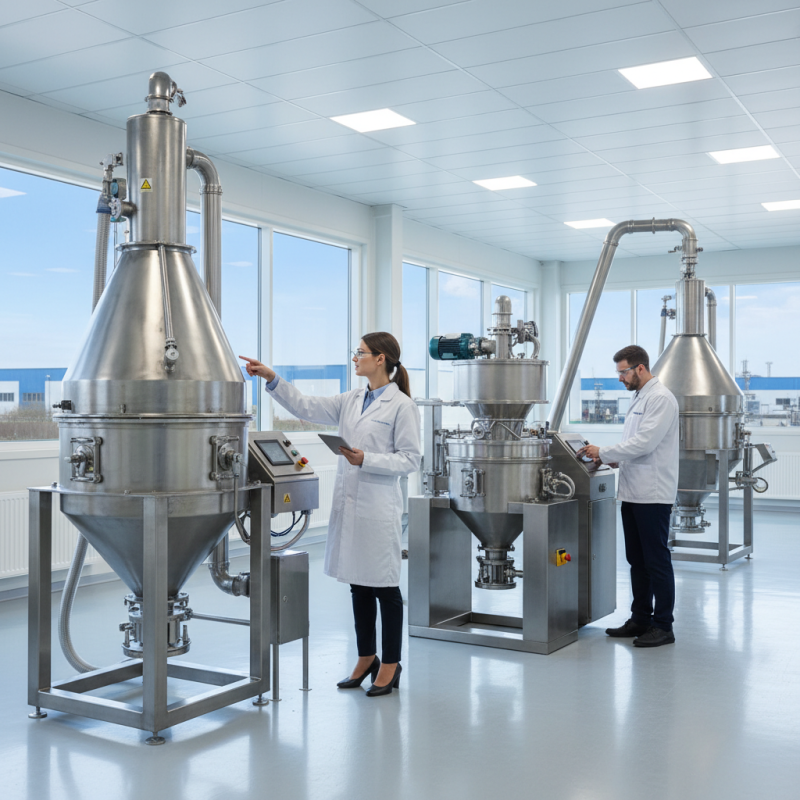
When selecting the right powder mixer, understanding the different types is key. There are three main types: ribbon, paddle, and planetary mixers. Each mixer serves a distinct purpose. Ribbon mixers are great for bulk powders. They ensure even mixing due to their wide, flat blades. They work well for dry materials like flour and sugar.
Paddle mixers are versatile. They can mix dry and wet powders. They are used in various industries, from food to pharmaceuticals. Their design allows for gentle mixing, avoiding damage to fragile materials. Planetary mixers, however, are more specialized. They are useful for creating uniform blends in smaller batches. Their unique movement allows for thorough mixing, but they may not handle large volumes well.
Choosing the best mixer requires consideration of your needs. Do you need to mix large quantities? Or do you require gentle mixing for delicate powders? Sometimes it’s hard to make the right choice. Each mixer has strengths and weaknesses. Reflecting on your specific requirements can guide you. Think about the materials you will use and how often you will mix. This reflection can help narrow down the options efficiently.
2026 Powder Mixers Types and Their Applications
Key Factors to Consider When Choosing a Powder Mixer
When selecting a powder mixer, several key factors demand attention. The mixer type is crucial. Options include ribbon mixers, paddle mixers, and vacuum mixers. Ribbon mixers excel in blending dry powders and granules due to their efficient design. In contrast, paddle mixers can handle thicker materials with ease. Industry reports indicate that the global powder mixing market is projected to grow by 4.5% annually, emphasizing the need for specialized equipment in various applications.
Consider the capacity of the mixer. Smaller operations may require mixers holding just a few liters. Larger manufacturers, however, might need mixers capable of processing thousands of liters. Understanding these requirements ensures efficiency and effectiveness. Additionally, mixing time affects productivity. A report from the Mixing Technology Conference reveals that optimal mixing time can cut operational costs significantly.
Lastly, ease of cleaning is often overlooked. Residue build-up can lead to contamination, impacting product quality and safety. Many mixers lack user-friendly designs, making cleaning a tedious task. The right mixer should facilitate maintenance while ensuring compliance with industry standards. Balancing these factors can be a challenge, but it is crucial for operational success.
Performance Metrics for Evaluating Powder Mixers
When choosing powder mixers, performance metrics are crucial. These metrics help evaluate the efficiency and effectiveness of various machines. For instance, mixing time is a key factor. According to industry reports, optimal mixing time greatly impacts product quality. A reduction in mixing time by just 20% can enhance the uniformity of the mixture by nearly 30%.
Another important metric is the energy efficiency of the mixer. Recent data shows that energy costs can account for up to 15% of total production costs. A mixer that consumes less energy can significantly reduce operational expenses. However, this can also lead to trades in performance. Users need to find a balance that maintains mixing quality while optimizing energy usage.
Particle size distribution is another area where metrics can shine. Consistency in particle size ensures uniformity in the final product. Reports indicate that mixers capable of producing a tighter particle size distribution can improve product stability. Still, some users may find it challenging to achieve this consistency without specialized equipment. Making the right choice is not always straightforward. Factors like cost, performance, and end-user requirements complicate the selection process.
2026 How to Choose the Best Powder Mixers for Your Needs? - Performance Metrics for Evaluating Powder Mixers
| Feature |
Description |
Performance Metric |
Ideal Value |
| Mixing Speed |
The speed at which the mixer operates. |
RPM (Revolutions Per Minute) |
200 - 400 RPM |
| Mixing Time |
The time required to achieve a uniform mix. |
Minutes |
5 - 15 minutes |
| Batch Size |
The maximum amount of powder that can be mixed at once. |
Liters or Kilograms |
50 - 500 kg |
| Power Consumption |
The amount of energy the mixer uses. |
Watts |
1000 - 5000 W |
| Noise Level |
The sound produced by the mixer during operation. |
Decibels (dB) |
70 - 85 dB |
| Ease of Cleaning |
How easy it is to clean the mixer after use. |
Cleaning Time (Minutes) |
10 - 30 minutes |
Common Features and Technologies in Modern Powder Mixers
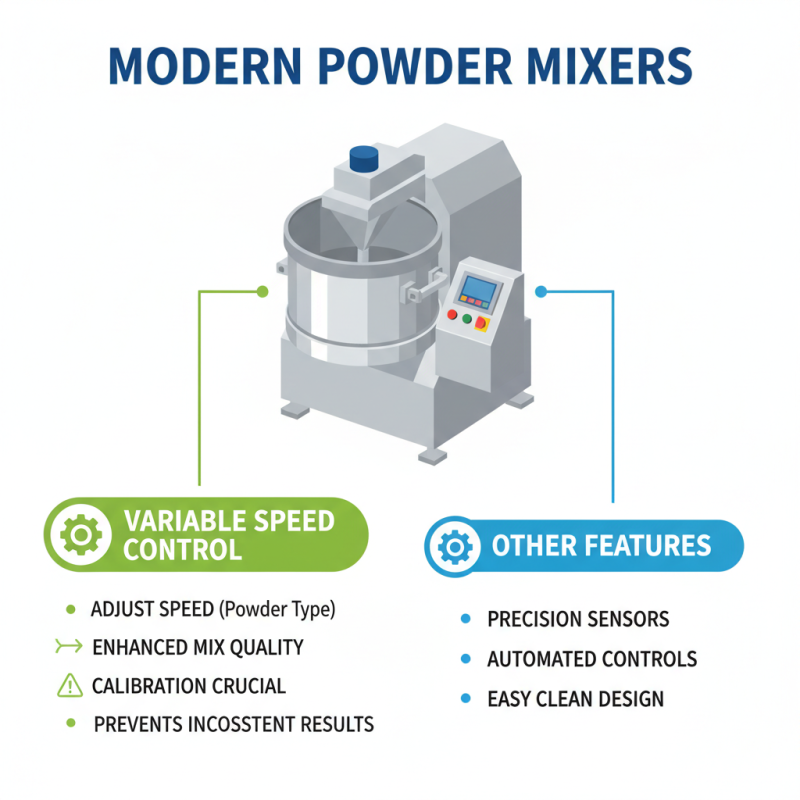
Modern powder mixers come with a variety of features designed to improve efficiency and performance. One common feature is variable speed control. This allows users to adjust the mixing speed based on the type of powder being processed. It can enhance mixing quality. However, if not calibrated correctly, it can lead to inconsistent results.
Another notable technology is the use of advanced sensors. These sensors monitor the mixing process, ensuring optimal conditions are maintained. For instance, they can detect temperature changes. This is crucial as excessive heat can degrade sensitive materials. Yet, over-reliance on technology can sometimes lead to neglecting manual checks, which are essential for quality assurance.
Additionally, many modern mixers include ergonomic designs. This makes operation easier and safer. However, some users find these designs occasionally impractical in tight spaces. The overall effectiveness can depend heavily on the specific needs of the user. Thus, careful consideration of the features is essential to avoid potential mismatches.