Blog
2026 Top Tablet Presser Types for Global Buyers?
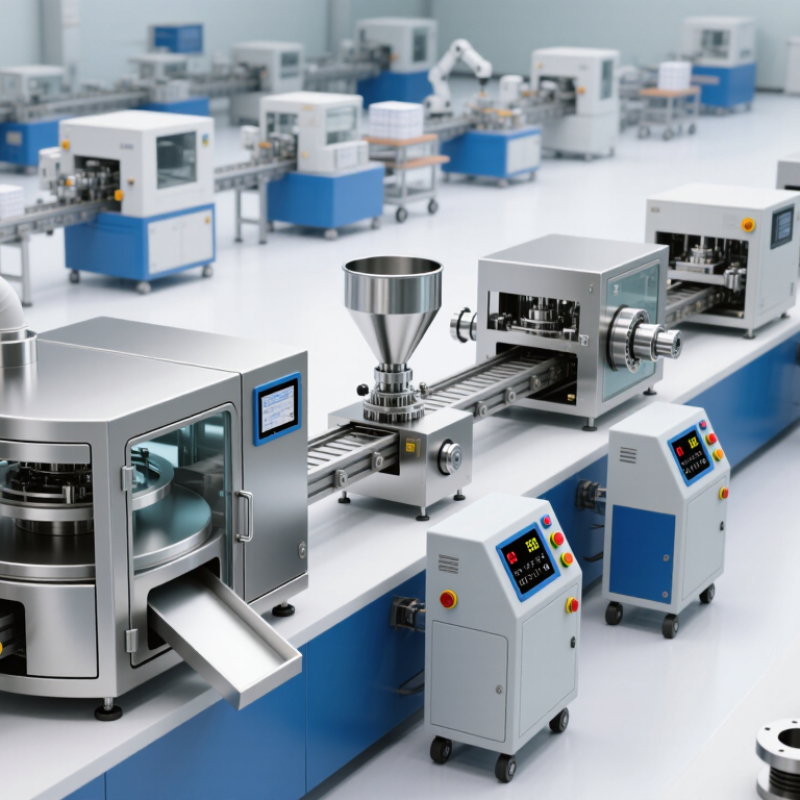
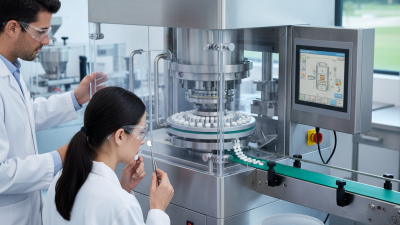
The 2026 tablet manufacturing market will demand more than higher compression speed. Global buyers will compare output, dosing consistency, tooling life, containment, automation, and service support. Tablet Presser selection now resembles choosing an integrated production system, not simply purchasing a machine. A rotary press running beside stainless-steel feeders, dust extraction, and in-process weight controls shows the real challenge: every component affects tablet quality.
Market reports point toward continued investment in pharmaceutical manufacturing equipment. Grand View Research highlights automation, process control, and flexible production as major growth drivers. Mordor Intelligence also identifies solid-dose manufacturing as a significant equipment segment, supported by rising generic-drug production and tighter quality expectations. Exact forecasts differ. That matters. Buyers should question impressive market figures and examine regional service capacity, validation support, spare-parts availability, and documented performance under real powder conditions.
“Quality cannot be tested into products; it should be built in,” said Janet Woodcock, former director of the FDA’s Center for Drug Evaluation and Research. Her principle applies directly to every Tablet Presser purchase. A machine may promise 1,000,000 tablets per hour, but speed alone proves little. Feeder design, compression-force monitoring, material handling, and operator training determine whether that promise survives a twelve-hour shift. Some purchasing teams still underestimate commissioning time. That is a costly weakness. This guide compares major Tablet Presser types for global buyers, while recognizing an uncomfortable truth: the cheapest press can become the most expensive asset when integration, cleaning, and technical support are ignored.
What Is a Tablet Press and Why Does Type Matter?
2026 Top Tablet Presser Types for Global Buyers?
What Is a Tablet Press and Why Does Type Matter?
A tablet press converts measured powder into solid tablets through filling, compression, and ejection. Its type affects output, uniformity, cleaning time, and validation effort. A single-station press suits development batches and small production runs. A rotary press uses multiple punches, making it more practical for continuous, high-volume manufacturing.
The difference is visible on the factory floor. A rotary machine may produce thousands of tablets per minute, while a single-station unit handles one tablet cycle at a time. Some rotary presses support bilayer tablets, shaped products, or controlled compression profiles. These features matter when formulation behavior changes under pressure. Granules can stick, cap, or vary in weight. The machine cannot fix poor powder flow.
Market pressure also influences equipment choices. IQVIA’s Global Use of Medicines 2024 projects worldwide medicine spending to reach about 2.3 trillion dollars by 2028. That growth may increase demand for efficient solid-dose manufacturing. However, speed alone is a weak buying criterion. Buyers should review the European Pharmacopoeia, USP requirements, and local Good Manufacturing Practice expectations before comparing specifications.
In my experience, cleaning access is often underestimated. It should not be. A faster press can create more downtime if tooling changes are difficult. Reported market forecasts also vary widely because analysts define “tablet press” differently. That uncertainty deserves careful checking. A balanced evaluation should compare compression force, feeder design, data recording, operator safety, spare parts, and lifecycle support.
How Tablet Presses Are Classified by Operating Principle
2026 Top Tablet Presser Types for Global Buyers
How Tablet Presses Are Classified by Operating Principle
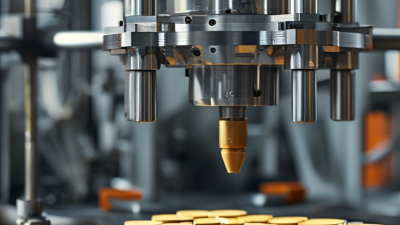
Tablet presses are mainly classified by how force reaches the powder. A single-punch press compresses one tablet per cycle. Its upper and lower punches move inside one die. This design suits development work, small batches, and frequent product changes. Pressure matters. Operators can observe filling, compression, and ejection directly.
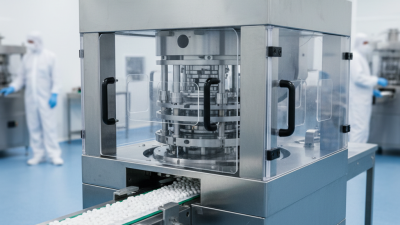
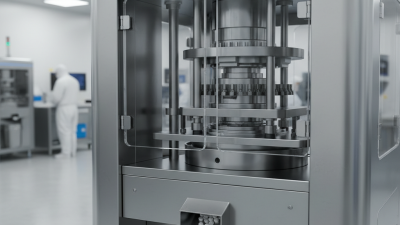
A rotary tablet press uses several punch-and-die stations fixed around a rotating turret. Each station fills, compresses, and ejects tablets during continuous movement. This operating principle supports higher output and more consistent production. Buyers should inspect turret speed, compression force, feeder design, and adjustment controls. Excessive speed can reduce filling accuracy. That risk is easy to underestimate.
Some rotary presses use pre-compression before main compression. This helps remove trapped air and improves tablet strength. High-speed models may include force monitoring, automatic rejection, and enclosed powder handling. These features improve control, but they also increase maintenance demands. More automation is not always better. It depends on staff skills, cleaning routines, and production volume.
A hydraulic or servo-assisted press applies force through controlled mechanical or hydraulic movement. Such systems can offer precise force profiles for specialized formulations. However, their classification may overlap with rotary designs. The operating principle and the control system are not identical concepts. Global buyers should request test data using their own formulation, tooling, and target weight. Laboratory results can mislead when production conditions differ.
Single-Punch Tablet Presses: Design, Uses, and Limitations
Single-punch tablet presses use one die, an upper punch, and a lower punch. An eccentric drive compresses powder through a controlled vertical movement. The operator adjusts fill depth, compression force, and tablet thickness. A typical unit produces roughly 30–100 tablets per minute, depending on formulation and tooling.
These machines suit formulation trials, small batches, training laboratories, and quality-control work. Their compact frames offer clear access to the compression zone. They also make changeovers relatively simple. MarketsandMarkets’ 2023 Tablet Press Market report projects steady global growth through 2028, with demand linked to expanding solid-dose production. Grand View Research’s 2024 pharmaceutical manufacturing equipment analysis similarly reports mid-single-digit annual growth. Those figures support investment interest, but they do not guarantee that one press fits every facility.
Output remains the main limitation. One compression station creates a hard ceiling for production speed. Manual powder feeding may also increase weight variation. Poorly flowing blends can bridge inside the feed shoe. Excessive force may cause capping, lamination, or punch wear. I have seen operators focus too heavily on rated pressure. That is a mistake. Blend flow, moisture, particle size, and tooling condition often matter more. FDA process-validation guidance emphasizes consistent, measurable process control. Therefore, buyers should test representative material before ordering. A single-punch press can be precise. It is not automatically efficient.
2026 Top Tablet Presser Types for Global Buyers? — Single-Punch Tablet Presses: Design, Uses, and Limitations
Practical technical comparison for pharmaceutical, nutraceutical, confectionery, chemical, and research applications
| Evaluation Dimension | Typical Single-Punch Tablet Press Data | Design or Operating Principle | Best-Fit Applications | Buyer Considerations and Limitations |
|---|---|---|---|---|
| Machine Configuration | One die cavity with one upper punch and one lower punch; usually an eccentric or cam-driven compression mechanism. | Each compression cycle produces one tablet. Powder filling, compression, and ejection occur sequentially at a single station. | Laboratory development, pilot production, teaching laboratories, and small-batch manufacturing. | Simple construction and easy access, but the single-station layout limits production capacity compared with rotary presses. |
| Typical Output | Approximately 600–6,000 tablets per hour, depending on tablet size, material properties, operator skill, and machine speed. | Output is governed mainly by the number of compression cycles per minute and the number of tablets produced per cycle. | Small batches, trial batches, formulation screening, and products with frequent changeovers. | Actual output can be substantially lower for difficult powders, large tablets, high compression forces, or strict in-process inspection. |
| Operating Speed | Common operating ranges are about 10–60 compression cycles per minute. | Mechanical speed is adjusted to balance output, powder filling, deaeration, compression dwell time, and tablet ejection. | Controlled development work and low-volume production where flexibility is more important than maximum throughput. | Higher speed may increase weight variation, capping, sticking, lamination, or inadequate die filling if the formulation is not optimized. |
| Compression Force | Common machines cover roughly 5–50 kN; some heavy-duty laboratory models can reach approximately 100 kN. | Force is transferred through the upper and lower punches to consolidate the powder inside the die. | Immediate-release tablets, many nutraceutical products, research formulations, and moderate-hardness products. | Required force depends on formulation, tablet diameter, target hardness, friability, and tooling. Maximum force should not be treated as a guaranteed production setting. |
| Tablet Diameter | Common tooling supports tablet diameters of approximately 5–25 mm; the exact limit depends on the die and press design. | Tablet diameter is determined by the selected die bore and punch tip, while tablet shape is determined by the punch profile. | Small pharmaceutical tablets, vitamins, mineral tablets, lozenges, and laboratory samples. | Large-diameter tablets require higher compression force and may reduce practical output. Tooling must be matched to the press specification. |
| Tablet Thickness | Typical tablet thickness is approximately 2–8 mm, subject to diameter, fill depth, powder density, and compression force. | Thickness is controlled by powder fill depth and the position of the lower punch, with final thickness affected by compression. | Products requiring flexible thickness adjustment during formulation development. | Very thin or very thick tablets may require specialized tooling, careful force control, and additional trials to prevent breakage or lamination. |
| Weight Control | Weight consistency is primarily determined by fill-depth adjustment, powder flow, bulk density, and operator control. | The lower punch sets the powder volume in the die before compression. It does not directly compensate for changes in powder density. | R&D batches and products with well-characterized, free-flowing granules. | Poorly flowing or segregating blends may cause weight variation. Automatic weight-control systems are less common than on advanced rotary presses. |
| Suitable Materials | Dry, reasonably flowable powders or granules with suitable compressibility and controlled moisture content. | Materials are fed into the die by a feed shoe or hopper before being compressed between the punches. | Pharmaceutical excipient blends, nutraceutical powders, detergent tablets, catalyst samples, and some confectionery formulations. | Very cohesive, elastic, abrasive, oily, or moisture-sensitive materials may require granulation, lubricants, dust control, or specialized tooling. |
| Changeover and Cleaning | Generally fast changeover because the machine has one die set and a small powder-contact area. | Operators can remove the die and punches for inspection, cleaning, or replacement without dismantling a large turret. | Multi-product development, contract trials, pilot batches, and facilities with frequent product changes. | Fast mechanical changeover does not eliminate the need for validated cleaning, line clearance, tooling inspection, and cross-contamination controls. |
| Automation Level | Available in manual, semi-automatic, and limited automatic configurations. | Optional controls may include motorized compression, force display, speed adjustment, emergency protection, and basic data recording. | Research laboratories and small manufacturers seeking a lower-complexity system. | Compared with modern rotary equipment, single-punch presses normally provide less continuous monitoring, lower automation, and fewer integrated process controls. |
| Footprint and Utilities | Compact benchtop or floor-standing designs are common. Many units use a standard single-phase electrical supply, but requirements vary by motor and region. | The compact frame contains the drive, compression assembly, die station, and powder feed system. | Facilities with limited floor space, pilot rooms, universities, and quality-control laboratories. | Global buyers should confirm voltage, frequency, grounding, guarding, noise, dust extraction, and local electrical compliance before purchase. |
| Dust and Containment | Basic machines may use local extraction; enclosed or contained versions can be specified for dusty or potent materials. | Containment is achieved through guards, covers, extraction ports, sealed charging arrangements, or external dust-collection systems. | Non-potent powders, controlled laboratory work, and applications where occupational exposure is manageable. | High-potency, sensitizing, or hazardous powders may require a dedicated containment strategy, not merely a standard machine enclosure. |
| Tooling Standards | Tooling may follow regional or manufacturer-specific formats; common choices include standardized single-punch tooling families. | Die bore, punch length, head design, tip profile, and keying must match the press and tablet specification. | Buyers needing multiple tablet shapes, debossing options, or development-scale tooling. | Always confirm punch and die dimensions, material grade, coating, hardness, replacement availability, and compatibility before ordering. |
| Quality and GMP Features | Useful features include stainless-steel product-contact parts, smooth cleanable surfaces, guarding, overload protection, and documented calibration points. | Equipment design supports repeatable operation, operator safety, cleaning, maintenance, and inspection. | Pharmaceutical and nutraceutical facilities operating under documented quality systems. | Machine features alone do not establish GMP compliance. Site qualification, cleaning validation, process validation, and operating procedures remain necessary. |
| Primary Advantages | Lower initial investment, compact structure, simple operation, flexible tooling, and relatively easy maintenance. | The single compression station reduces mechanical complexity and simplifies access to the die and punches. | Product development, low-volume production, educational use, and frequent formulation changes. | It is often economically attractive when annual volume is low or when a buyer needs flexibility rather than continuous high output. |
| Main Limitations | Low throughput, greater operator dependence, limited automation, and less suitability for large-scale continuous production. | Only one tablet is compressed per cycle, and powder filling and weight control are less continuously optimized than on many rotary systems. | Small-scale and development-stage production. | For high-volume commercial production, a rotary tablet press is generally more appropriate after formulation and process requirements are established. |
| Best Buyer Profile | Organizations needing approximately laboratory-to-small-batch capacity, flexible tooling, and straightforward operation. | The machine prioritizes accessibility and adaptability over maximum production efficiency. | R&D centers, universities, pilot plants, emerging manufacturers, and companies producing multiple low-volume tablet types. | Buyers should compare required annual volume, formulation behavior, containment needs, validation expectations, service availability, and spare-parts access. |
Rotary Tablet Presses: Capacity, Features, and Applications
Rotary tablet presses remain the main choice for high-volume solid-dose production in 2026. Their rotating turret supports continuous compression, unlike intermittent single-punch equipment. Typical laboratory models produce 5,000–50,000 tablets per hour, while industrial systems may exceed 1,000,000 tablets per hour. Capacity depends on punch count, tablet size, compression speed, and formulation behavior.
A 2024 Grand View Research report indicates that the global tablet press market is expanding at approximately 6% annually through the decade. This growth reflects demand for faster, more controlled pharmaceutical and nutraceutical manufacturing.
Single-layer presses suit standard tablets and stable formulations. Bilayer and multilayer presses separate incompatible ingredients or release profiles within one tablet.
High-speed rotary models add precompression, automatic force monitoring, reject control, and dust extraction. Quick-change turrets can reduce cleaning and format-change time.
Containment features matter when powders create occupational or cross-contamination risks. The FDA Process Validation Guidance emphasizes process control and continued verification, not capacity alone.
In practice, weak powder flow may reduce output, increase weight variation, or cause sticking. A 2023 MarketsandMarkets analysis also identifies automation and quality monitoring as major equipment trends.
Buyers should compare usable output, compression-force stability, cleaning access, validation records, and operator training before selecting a press. Fancy speed is not enough.
How Global Buyers Can Compare Tablet Press Types in 2026
2026 Top Tablet Presser Types for Global Buyers?
How Global Buyers Can Compare Tablet Press Types in 2026
Global buyers should compare tablet press types by production purpose, not headline speed. A single-punch press suits development work and small batches. Rotary presses support continuous production and higher output. Bilayer models add separation between formulations, but they require tighter powder control and longer setup checks. High-speed designs can reduce unit cost. They may also increase dust, vibration, and tooling stress.
According to Grand View Research’s 2024 Tablet Press Machine Market report, the global market was valued at more than USD 4 billion in 2023 and is expected to grow steadily through 2030. This growth reflects wider demand for efficient solid-dose manufacturing. However, reported growth does not guarantee a suitable machine. Buyers should compare feeder design, compression force, turret speed, dwell time, and ejection behavior. Small differences matter.
Hands-on trials remain essential. Ask suppliers to test the actual powder, tooling size, and target tablet weight. Measure weight variation, hardness, friability, and changeover time. The United States Pharmacopeia and current GMP guidance provide useful quality references. Reviewers should also inspect dust extraction, guarding, data records, and cleaning access. Fast output looks attractive. Maintenance may tell another story. A 2024 industry equipment outlook from MarketsandMarkets also identifies automation and process monitoring as major investment drivers. Still, automation cannot correct poor powder flow or weak operator training. That part is easy to underestimate.
2026 Top Tablet Presser Types for Global Buyers
How global buyers can compare tablet press types by indicative production throughput.
The ranges show commonly reported indicative output levels in tablets per hour. Single-punch presses are generally suited to laboratory, development, and small-batch work; rotary presses support larger production volumes; high-speed rotary and multilayer presses are designed for continuous commercial manufacturing. Actual output depends on tablet diameter, formulation, compression force, fill depth, turret speed, tooling configuration, and the number of stations.
Related Posts
-
How to Choose the Right Natoli Tablet Press for Your Needs?
-
Why Choose Natoli Tablet Press for Your Pharmaceutical Manufacturing Needs
-
What is Natoli Tablet Press and How Does It Improve Tablet Production
-
Why Choose a Tablet Press for Your Manufacturing Needs?
-
A Comprehensive Guide to the Best Tablet Presses for Global Buyers
-
10 Essential Tips for Choosing the Right Tablets Press Machine?